
10 Strategies to Make Financial Content Work Smarter
Across channels, formats, and audiences
Summary: Many financial firms are sitting on a treasure chest of old or unpublished content that can be repurposed to attract new audiences and help retain existing customers.
That’s what we’re here to help you do.
While financial marketers have never had so many channels to reach potential audiences with content—from short blog posts, to newsletter blasts, to social media videos—the problem is that the number of options available can make it seem like you need to be everywhere at once. If not, you won’t have enough reach to make a difference in business outcomes.
The good news is that content doesn’t need to go viral on TikTok to be effective, and you don’t need to hit every channel. Also, it’s never been easier to develop a system to polish existing content that can also be repurposed into different formats to expand reach and scale.
This paper is a straightforward how-to, offering 10 actionable ideas for ways to refresh existing content. It’s not an exhaustive list and won’t apply universally. It’s intended to be a source of inspiration and ideas.
For each example, we explain the characteristics, use cases, and cost considerations when repurposing from one format to another. Think of it as what the content would look like if it were morphed or transformed into something new, like Clark Kent into Superman. We’ll highlight the transition process, what specific variables are affected, and why it can help expand reach.
Drawing on more than 20 years of experience producing compliant content for leading firms like TD Ameritrade, Charles Schwab, Robinhood, Fisher Investments, and Mercer Advisors, Fred Ruffy outlines a practical, compliance-first approach to content repurposing. He also created Compliance Companion GPT, which is a free custom GPT with a knowledge base of FINRA and SEC rules regarding communications with the public (CWTP).[i] It’s handy for pre-screening materials before they get to your compliance desk.
If your firm is looking for an objective third party to help you leverage your existing content for positive business outcomes, you might also be interested in the accompanying video: Educational Content as a Scalable Asset.
The information provided in this guide is believed to be accurate at the time of publication, but it is not guaranteed. No representation or warranty, express or implied, is made as to its accuracy or completeness.
[i] Compliance Companion GPT, 2025: https://chatgpt.com/g/g-68be1560f4748191a9f39eee70c8d269-compliance-companion-gpt
Table of Contents
How to Use This Guide (and a Note on AI Use) 3
Example 1: From Blog Post → LinkedIn Short Video. 5
Example 2: Website Articles / Videos → Sales Funnel 6
Example 3: Webinar → Lead Magnet 8
Example 4: White Paper → Video Sales Letter (VSL) 10
Example 5: From Executive Summary → YouTube Video. 12
Example 6: Slide Deck → Explainer Video. 14
Example 7: Internal Training or CE → Client-Facing Education (Courses) 16
Example 8: Marketing Copy → Platform Specific Ads. 18
Example 9: Thought Leadership/Commentary → Year (or Quarter) in Review.. 20
Example 10: Client or Website FAQs → Short Educational Video Library. 22
How to Use This Guide (and a Note on AI Use)
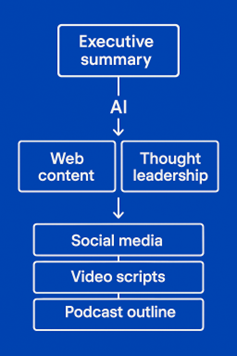
Repurposing original and proprietary content is a common use case for AI tools like ChatGPT. For example, leveraging AI, a blog post can become a video script, an educational article can be the topic for a webinar, or a well-written executive summary can serve as a foundation for web content, white papers, storyboards, and other derivatives.
While repurposing the content, AI tools can also update, edit, provide reference material, change the tone, recommend visuals, and assist in other ways to accomplish repurposing tasks that once required hours and days to accomplish.
Risks and Benefits of Using AI in Content Production
While many people are already using AI to repurpose content, there are inherent risks and important considerations before going all in. For one, AI is often guilty of providing inaccurate information, using copyrighted material, and misinterpreting existing rules and regulations.[i]
Second, AI can help repurpose content, but it doesn’t create a system of content reproduction that can be repeated. It’s best used as a tool within the system, rather than a system in itself.
This guide is intended to help you better understand the different elements within content reproduction. It doesn’t delve into specific AI tools or use cases for AI (We cover that in more detail in the accompanying video Educational Content as a Scalable Asset).
However, many of the examples involve repurposing existing content (articles, slide decks, FAQs) into educational and promotional videos. For these examples, AI can help control costs by expediting some tasks like compliance prereviews, storyboard development, visuals, backgrounds, auto captions, and using AI-generated avatars rather than live talent.
5 Dimensions
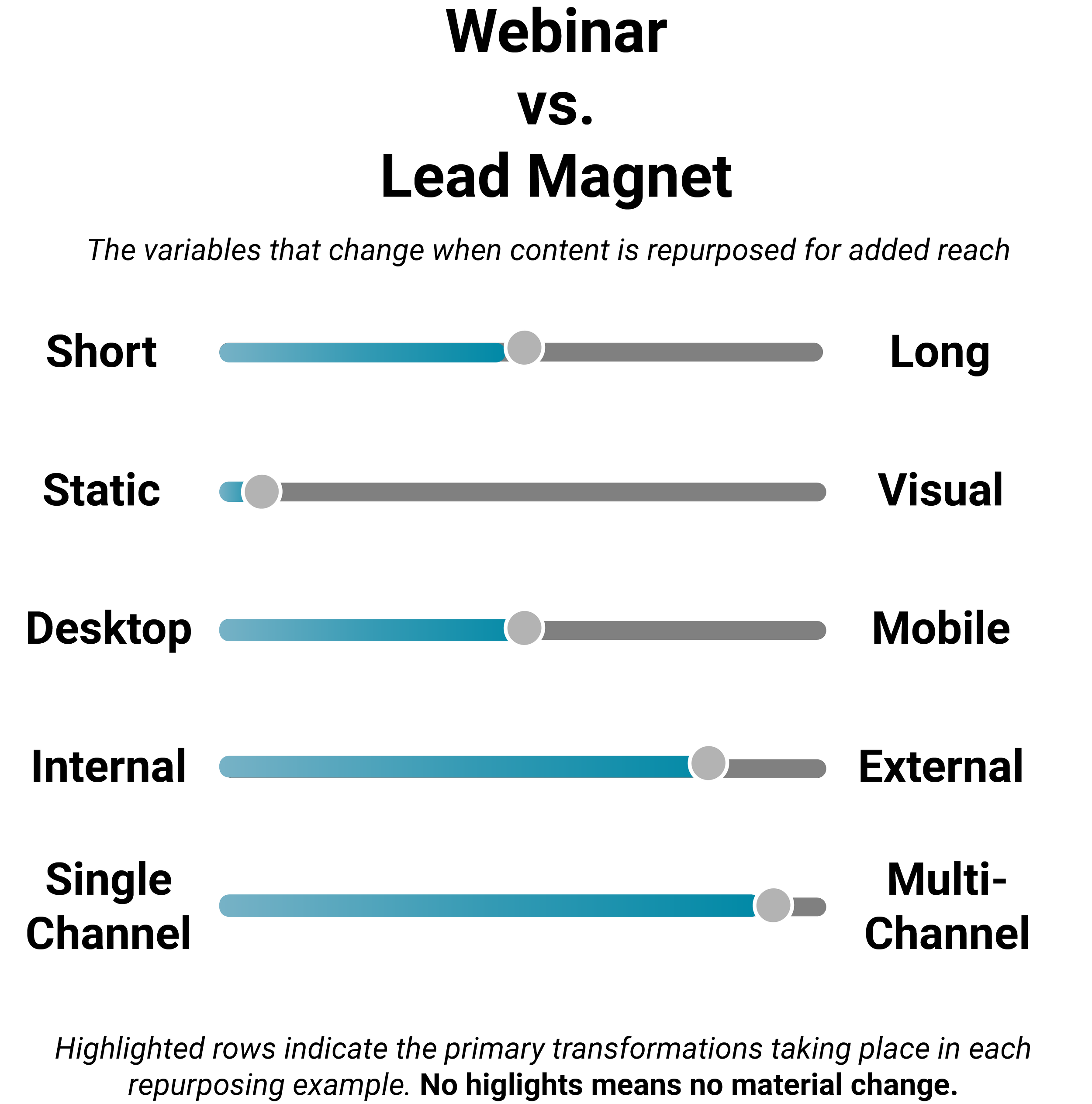
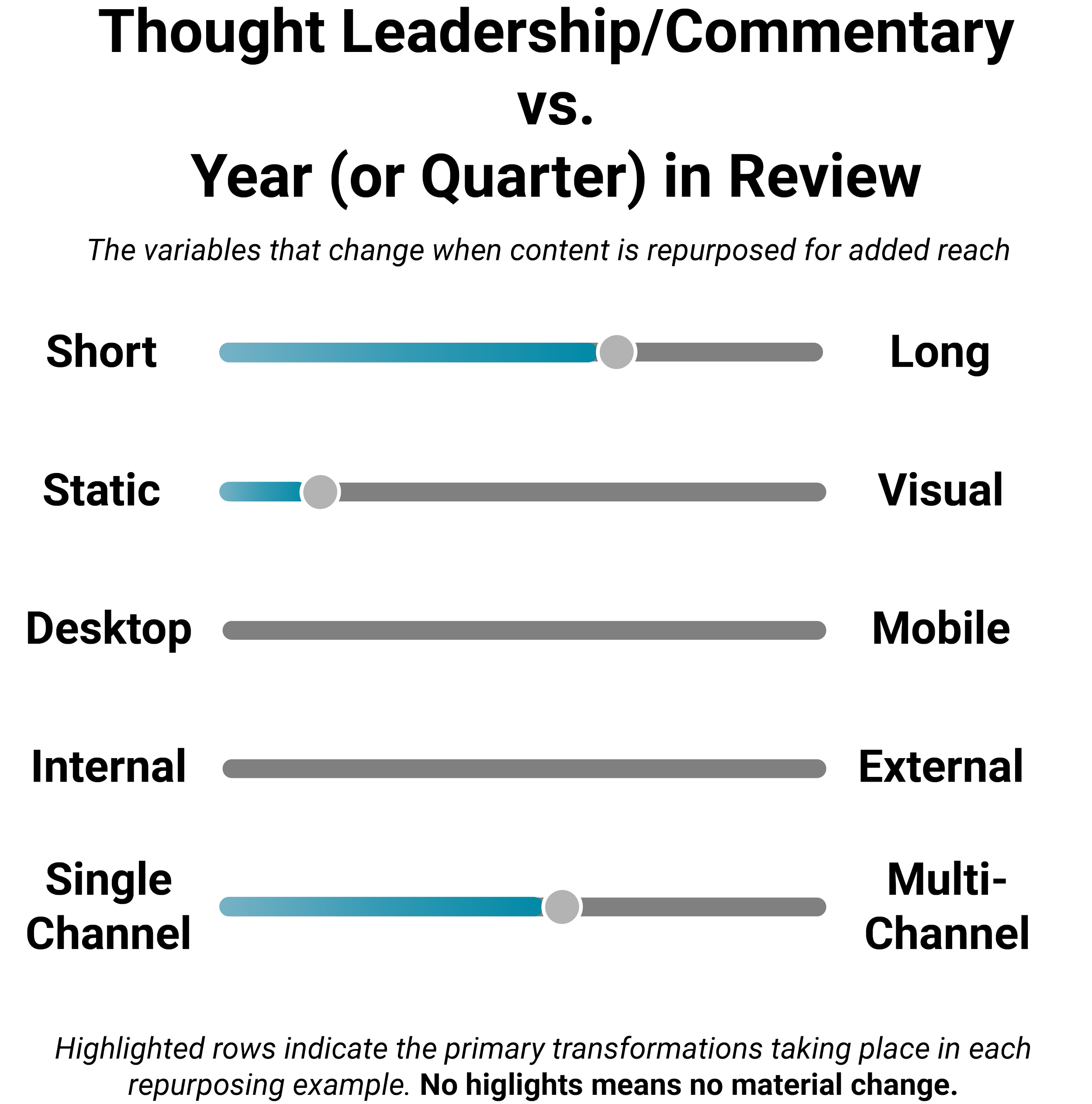
Every example in the guide leverages the same visual framework to show how a piece of content evolves when it’s repurposed. Specifically, five dimensions determine how content is experienced: length, format, device, audience scope, and distribution.
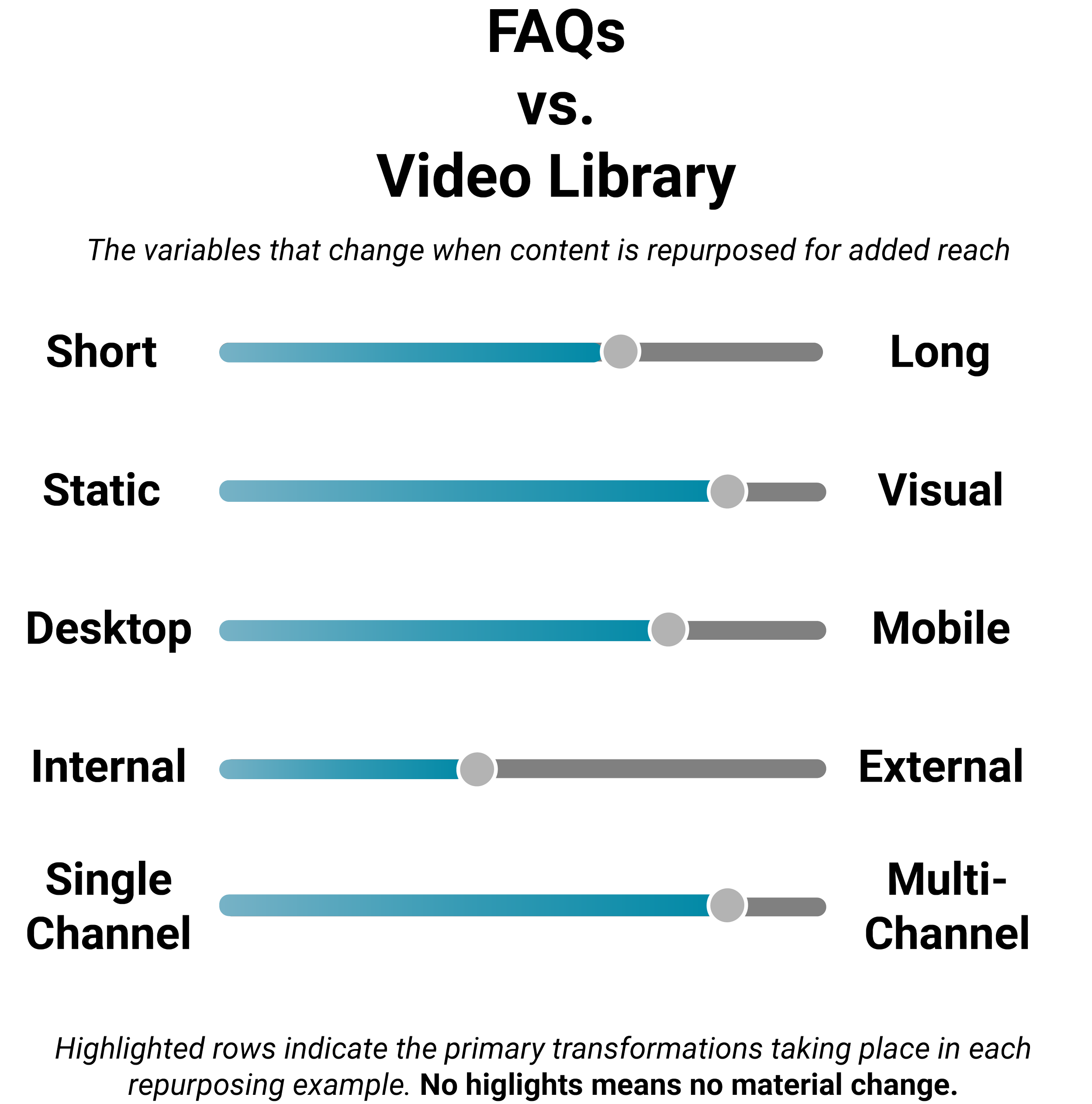
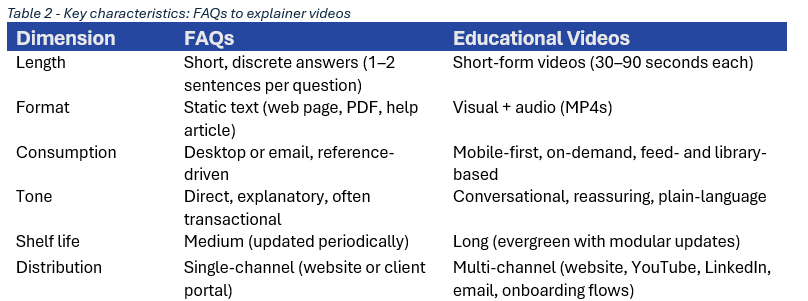
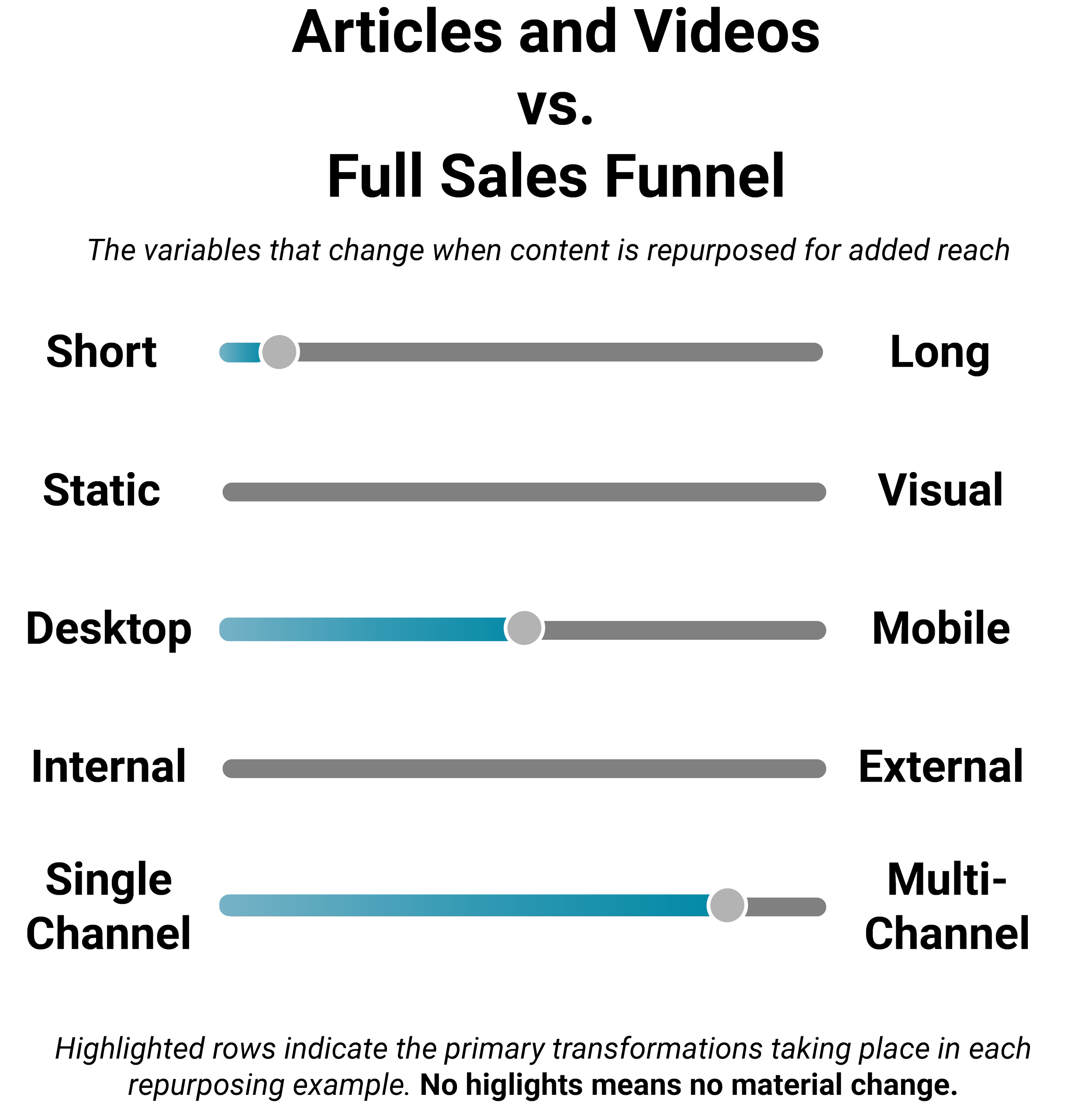
Rather than treating repurposing as an update or refresh, this guide highlights the characteristics that change and why. A visual, such as the one below, appears along with each example, with a bar that’s both blue and gray indicating the primary transformations taking place. For example, converting a blog post to a video would rank heavily in changing a static asset to a dynamic one, from desktop to mobile format, and from single to multi-channel.
[i] Copyright Office Releases Part 2 of Artificial Intelligence Report, January 29, 2025
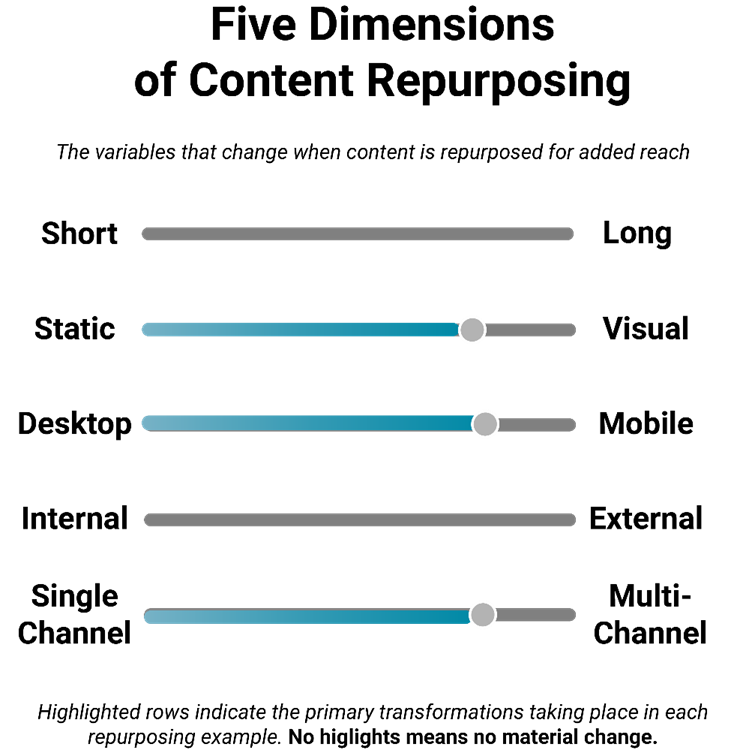
You’ll see from the emerging pattern over the ten examples that effective repurposing of content is less about creating more and more about designing content to travel farther, reach different audiences, and remain compliant across channels.
#1: Blog Post → LinkedIn Short Video
Example: “The Benefits of a Roth IRA” → “Roth IRAs 101” (90-second educational video)
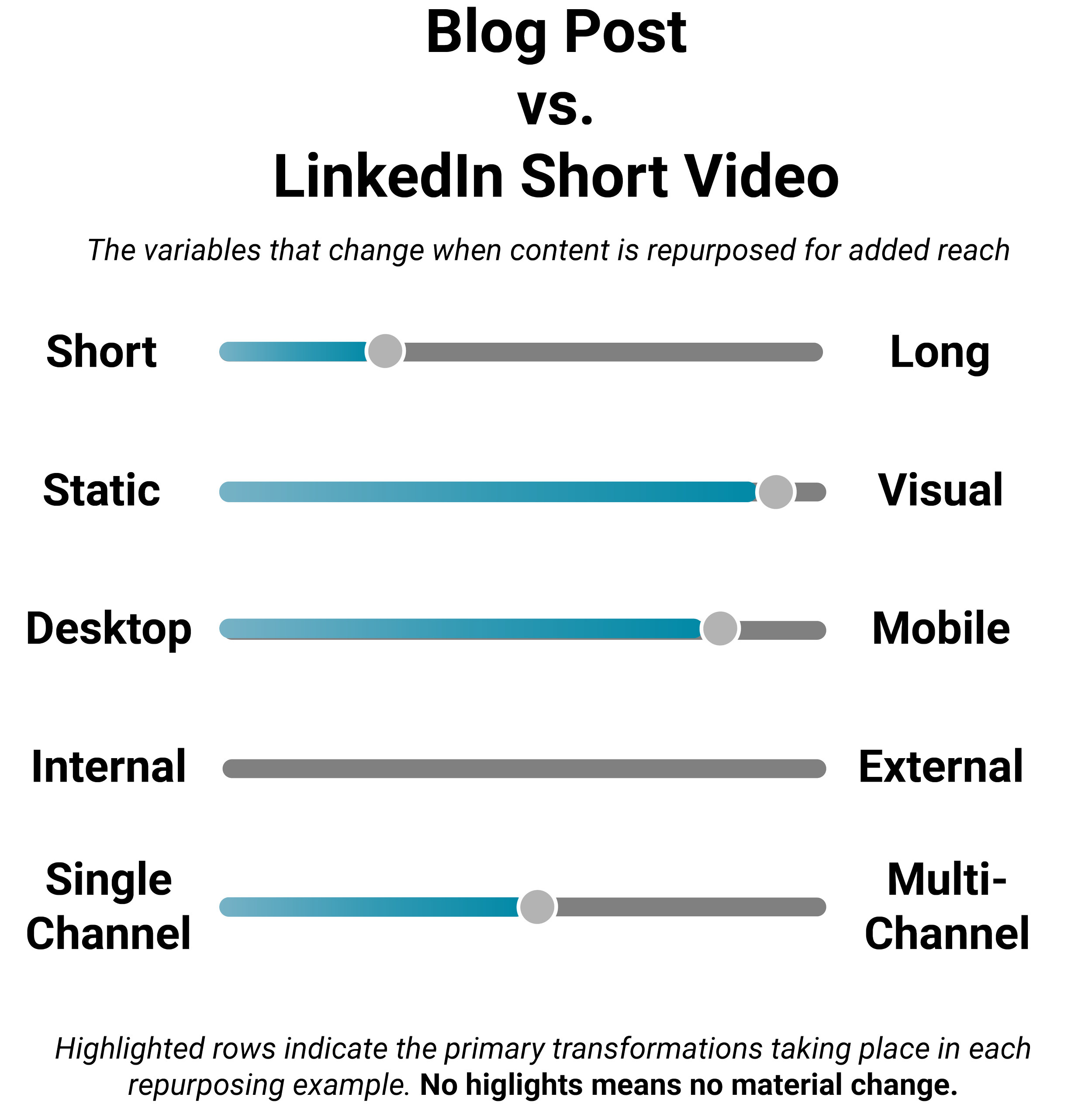
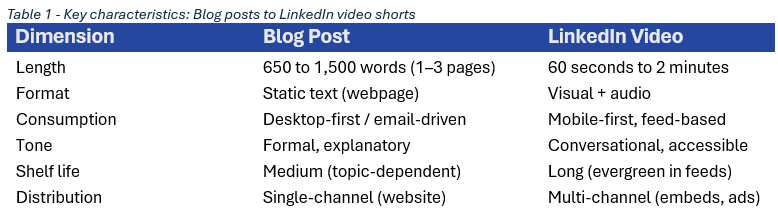
Repurposing a high-performing blog post or short article into a LinkedIn short video shifts educational content from a pull-based format to a feed-driven one. While blog posts are viewed organically based on website traffic and deliberate reading, short videos meet prospects where they already spend time, increasing the chance that key ideas are seen rather than skimmed or missed entirely.
The transformation preserves the original insight and compliance notes, while adapting delivery to a mobile-first, conversational format that can help build familiarity, reinforce expertise, and keep the firm visible in a professional setting.[i]
Why This Transformation Matters
Blog posts are arguably the most common content formats used by financial firms, but they are outdated and limited by where and how they are consumed. In my experience, most blog content is written for desktop reading and discovery through a firm’s website or email list, which narrows its reach to audiences already familiar with the brand.
Repurposing a blog post into a short LinkedIn video takes an existing, approved idea and places it directly into the feeds where prospects, centers of influence, and peers already spend time, without requiring new research or messaging. LinkedIn is especially useful for business-to-business firms. Business-to-customer entities can use a similar approach by converting text to scripts for YouTube, Instagram, or TikTok shorts.
Why This Works
The goal here is to better align existing content with modern consumption behavior: short, visual, mobile-first, and socially distributed. From an operational standpoint, the source material is already vetted and compliant, which lowers costs of production and reduces the chance of bottlenecks in the compliance review process (the update can potentially flag problems with the existing blog post as well).
The result is broader reach, increased familiarity, and a more efficient use of content firms already own. For business-to-business financial services, videos can also be used in LinkedIn video ad campaigns, but are typically shorter (less than 30 seconds) and require ad spending.
Note: This same pattern can be applied to blogs, FAQs, thought leadership, and other written content covered later in this guide.
#2: Client or Website FAQs → Short Educational Video Library
Example: “Do you offer robo-advisors?” → “Pros and cons of robo-advisors” (2-min. explainer video)
If you already have frequently asked questions on your website, they can serve as topics for a short educational video library. Instead of answering the same questions repeatedly in meetings or emails, firms can offer clear, plain-language responses that scale across audiences and time.
Organized as a library, these videos reduce friction in the decision-making process, set expectations early, and help prospects self-educate. The result can be a more efficient, consistent experience before any one-to-one conversation takes place.
Why This Transformation Matters
FAQs often capture the earliest concerns investors raise before engaging more deeply. Questions might be about fees, risk, process, or whether a firm’s approach is even relevant to them, and can naturally serve as a bridge between initial curiosity. In fact, detailed explanations aren’t just an option for some firms because they’re required to provide context when offering complex investments or strategies.
Repurposing FAQs into short educational videos goes further by providing firms a way to standardize a video production workflow and ensure that core concepts are delivered consistently.
When This Works
While short educational videos align with how investors prefer to consume information today—quickly, visually, and on demand—continuity is essential to ensure the messages are heard. Producing one or two videos and uploading them to YouTube is unlikely to yield any positive business outcomes. While FAQs can serve as a source of ideas, any short video series should be seen in the context of a larger marketing plan.
The good news is that the costs of production for educational videos are relatively low. A typical workflow requires script or storyboard development, the shoot, basic video editing, and suitable archiving of MP4 files and accompanying text. AI avatars can be used instead of live talent, which means there’s no expensive studio time or hours spent away from client-facing roles. You’ll find an example of a stylized avatar in the accompanying video.
Note: You’ll find other examples of content being repurposed into video sales letters (VSLs), explainer videos, and a YouTube channel later in some of the other examples in this guide.
#3: Website Articles / Videos → Sales Funn
Example: retirement planning articles → Landing page, educational video, and downloadable guide
Think of this repurposing project as taking whatever unstructured content is available and creating an orchestrated lead-gen system. In other words, transforming website articles, marketing materials, pitch decks, and videos into a sales funnel isn’t about creating new content; it’s about restructuring existing content around a clear objective.
A well-planned sales funnel guides prospects through a sequence: attract, educate, and convert. The biggest change isn’t format or length, but distribution and intent. It’s all about turning passive content into a system designed to create qualified conversations.
Why This Transformation Matters
Many financial firms already produce high-quality articles and videos, but those assets are typically published without a clear conversion path. Visitors often read a post or watch a video, gain value, and then leave. People love the idea of getting free information and education.
Repurposing website content into a sales funnel introduces structure and intent. Instead of relying on chance discovery or repeat visits, firms guide prospects from general education to more specific insights, and ultimately to a clear call to action. Think of it as attract, educate, and convert.
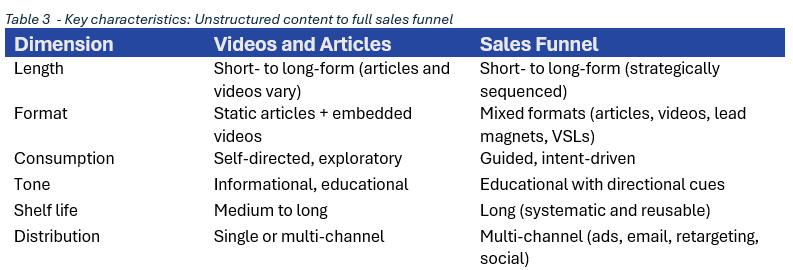
Why This Works
Because the funnel is built from existing, approved articles and videos, firms can avoid the cost and risk of creating entirely new messaging. The process also aligns with how people make decisions regarding their finances: gradually, over time, and with increasing levels of trust.
Operationally, a sales funnel requires an upfront investment that can potentially pay for itself many times over from just a few conversions. It’s not about aggressive sales tactics, but an orchestrated ad campaign to drive traffic (attract) to a dedicated landing page for education (print and video), followed by a call-to-action (contact or schedule an appointment). Once all of the pieces are in place, the result is a low-maintenance, scalable system that turns educational content into a source of qualified conversations.
#4: Webinar → White Paper, Guide, or eBook
Example: Bond Ladders for a Low-Rate World (webinar) → The Risks and Benefits of Bond Ladders
Repurposing a webinar into some type of long-form content or lead magnet removes the biggest barrier to engagement: time. Instead of asking prospects to attend a live session or replay a long recording, the core ideas are distilled into an on-demand resource like a downloadable PDF that can be saved for later and viewed on both desktop and mobile.
The result is content that can work continuously: capturing interest, qualifying prospects, and extending the value of a single presentation well beyond the original event. This approach is especially effective when paired with Example 3: Website Articles / Videos → Sales Funnel, where the lead magnet becomes a natural entry point into a broader educational journey.
Why This Transformation Matters
Webinars are one of the most resource-intensive content formats financial firms produce. They require planning, promotion, compliance review, high-quality video and audio, live delivery, and follow-up. But the impact of a webinar is often limited to a narrow window of time and a relatively small audience.
By repurposing into a longer piece of print content, firms preserve the intellectual value of the presentation while dramatically expanding its reach. Instead of being tied to a specific date or time commitment, the content becomes accessible to prospects at any stage of their research process, making it far more likely to be discovered, downloaded, and revisited.
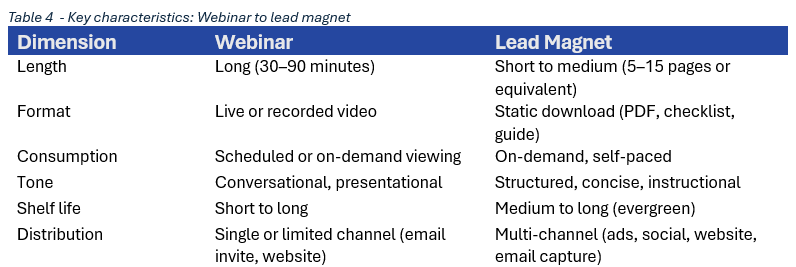
Why This Works
A single webinar can generate multiple pieces of content—such as summaries, checklists, or decision guides—each supporting different stages of a funnel. It transforms a one-time event into a durable asset that continuously attracts and qualifies prospects, while reinforcing the firm’s expertise through education rather than promotion.
From an operational perspective, the source material has already been researched, structured, and reviewed, which keeps production costs low and compliance workflows predictable. AI can do a lot of the heavy lifting for the repurposing, but final edits and reviews typically require human judgment. Slide decks for webinars can also serve as a foundation for a video, which we cover in a later example.
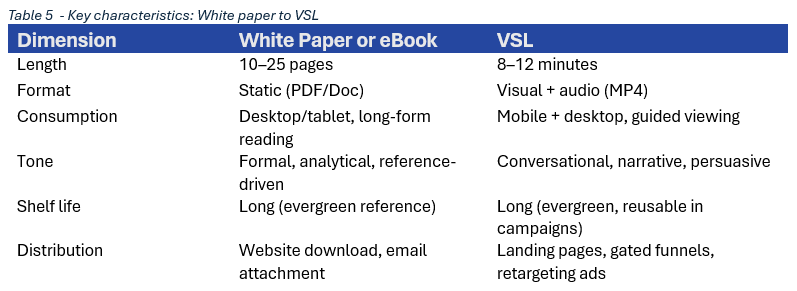
#5: White Paper or eBook → Video Sales Letter
Example: “Setting Up An Estate Plan in 2026” (20 pages) → 10–12 minute educational VSL
Repurposing a white paper or guide (like this one) into a VSL preserves the depth of the original research while dramatically improving how it’s consumed. Instead of asking prospects to self-navigate a long document, a VSL guides them through the key insights, adds narrative structure, and introduces a clear next step at the right moment.
The result is long-form education that feels more accessible, more engaging, more personal, and more likely to convert—without sacrificing substance or compliance discipline. This approach works especially well when paired with Example 3: Website Articles / Videos → Sales Funnel, where the VSL functions as a macro piece of content and the central educational anchor, supported by shorter content and a downloadable lead magnet.
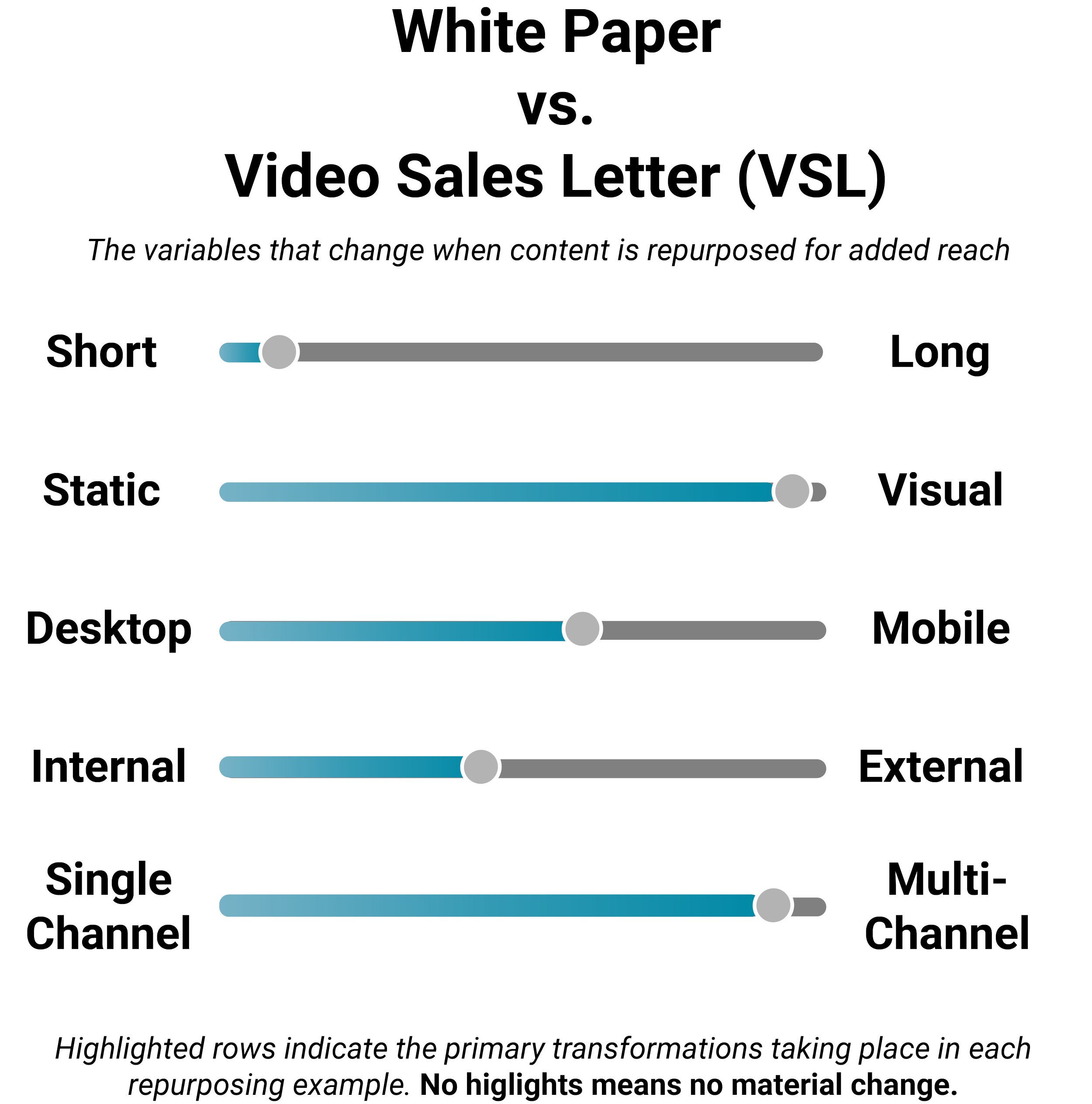
Why This Transformation Matters
White papers are one of the most trusted and widely used formats in financial services, but they are also one of the least consumed in full. Even highly motivated prospects may skim, postpone, or abandon a long document—especially when reading on mobile devices or during short attention windows.\
Transforming a white paper into a VSL shifts the burden of navigation from the reader to the presenter. Instead of expecting prospects to extract meaning on their own, the firm guides them through the most important insights in a logical, narrative sequence. This ensures that key ideas are understood in context and that the intended takeaway is not lost due to fatigue, distraction, or selective reading.
When This Works
From an operational standpoint, VSLs are grounded in an existing, approved document, which reduces research costs and helps maintain predictable compliance review cycles. Scripts and visuals for the video are typically added to a storyboard, which can be submitted to compliance before the actual shoot.
The downside of a VSL is that it isn’t cheap to produce. It requires a time commitment from live talent (potentially replaceable by an AI voice and avatar), the ability to record high-quality video and audio (a poor production will do more harm than good), and an ad campaign to boost traffic. Because it’s typically not used as a standalone tool but as part of a funnel, the production of other assets (short clips, downloadable material like the white paper itself, and a landing page) must also be developed.
In some situations, the investment is well worth it, and repurposing a single white paper can be the foundation for an entire educational marketing campaign. This reduces the cost of production and the cost per lead generated.
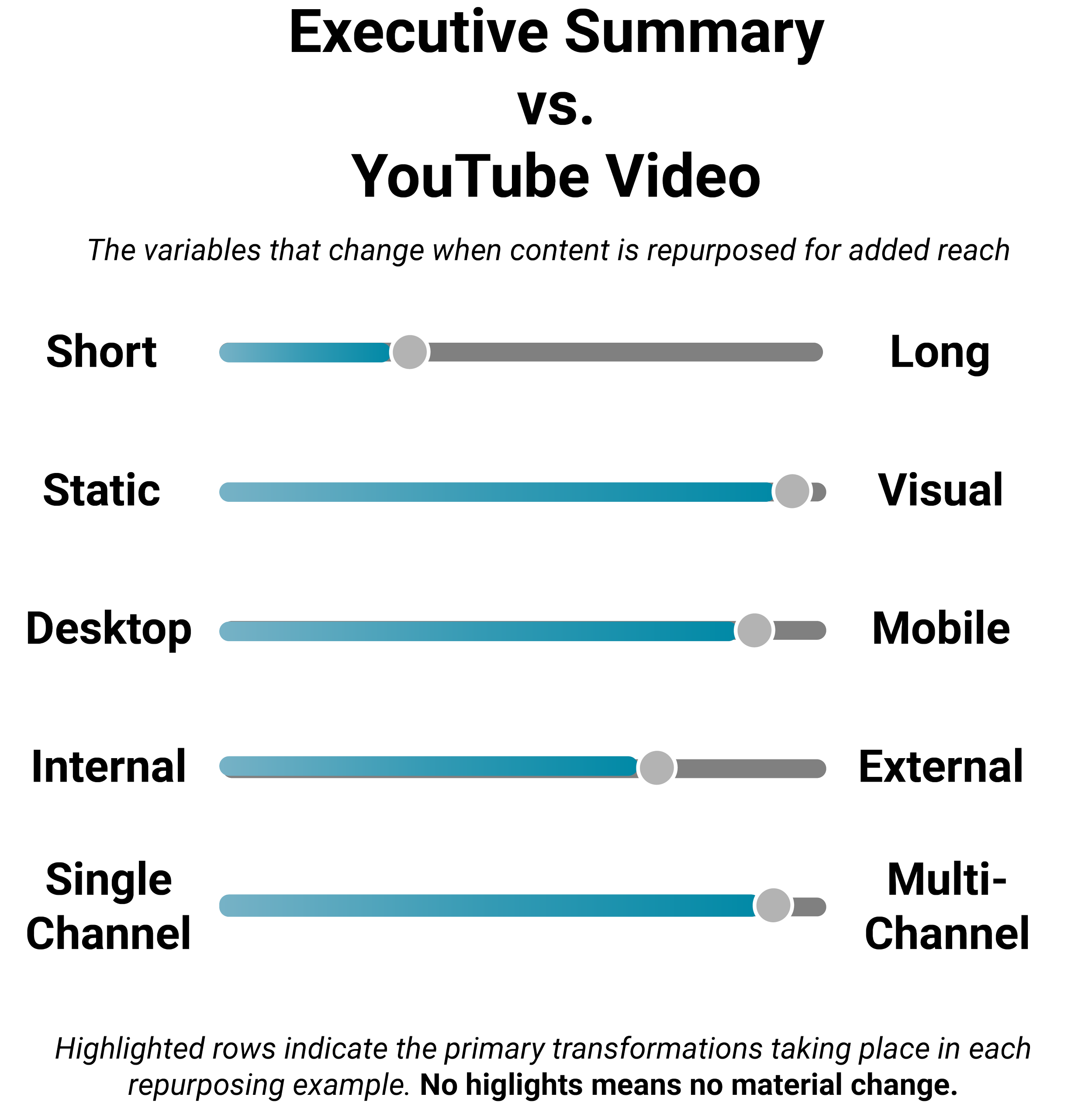
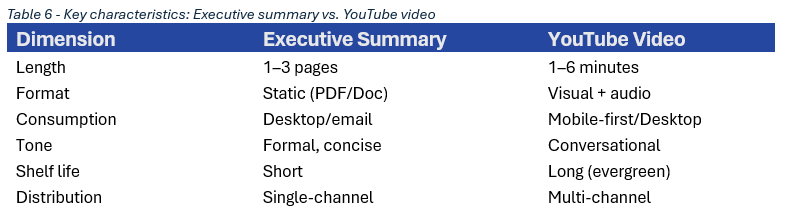
#6: From Executive Summary → YouTube Video
Example: Quarterly market outlook → 5–8 minute YouTube educational video explaining key themes
An executive summary is often used to summarize reports, proposals, or quarterly outlooks, and while it reflects a firm’s brand and perspective, it’s usually consumed by a narrow, internal audience in a single sitting.
Using an executive summary as the foundation for a YouTube educational video is uncommon, but it can dramatically expand reach. The transformation shifts the content from a static, desktop-oriented document into a dynamic, visual format designed for discovery and repeat exposure. Instead of living inside a PDF accessed by a small group, the core ideas are translated into a format that can be encountered casually, revisited over time, and surfaced algorithmically to new audiences.
The objective is not immediate conversion. It is familiarity and continuity—allowing prospects to encounter a firm’s thinking consistently, across multiple touchpoints, long before a sales conversation ever occurs.
Why This Transformation Matters
YouTube has become one of the most widely used platforms for investor education, particularly among audiences who prefer visual explanations over long-form reading. While the platform is crowded, its scale and search-driven discovery model allow educational content to reach viewers who may never visit a firm’s website or engage on other social channels.
What matters most is not a single video, but consistency. A YouTube channel built around recurring educational themes—quarterly outlooks, market context, or strategic frameworks—creates a cumulative effect. Some advisors have reported that it can take up to 100 videos before seeing a measurable increase in likes, subscribers, and leads.
Each video reinforces the last, establishing pattern recognition and credibility over time. This means that prospects often arrive already familiar with their perspective, having watched multiple videos before making contact. In some cases, YouTube becomes the primary source of inbound interest, not because any one video converts, but because repetition builds trust.
Why This Works
The goal behind transforming executive summaries into YouTube videos is to expand reach by delivering content to how many customers consume content: on mobile devices, in short sessions, and on their own schedule.
From an operational standpoint, the source material is already reviewed and approved, which can speed up additional compliance reviews. Like the videos mentioned in the previous examples, the costs of production usually involve script writing, storyboarding, compliance approvals, video shoots, video editing, and storage/archiving.
Note that standalone YouTube videos aren’t likely to get much support from YouTube’s algorithm; continuous posting over a substantial period of time is the way to get more likes, subscribers, views, and leads.
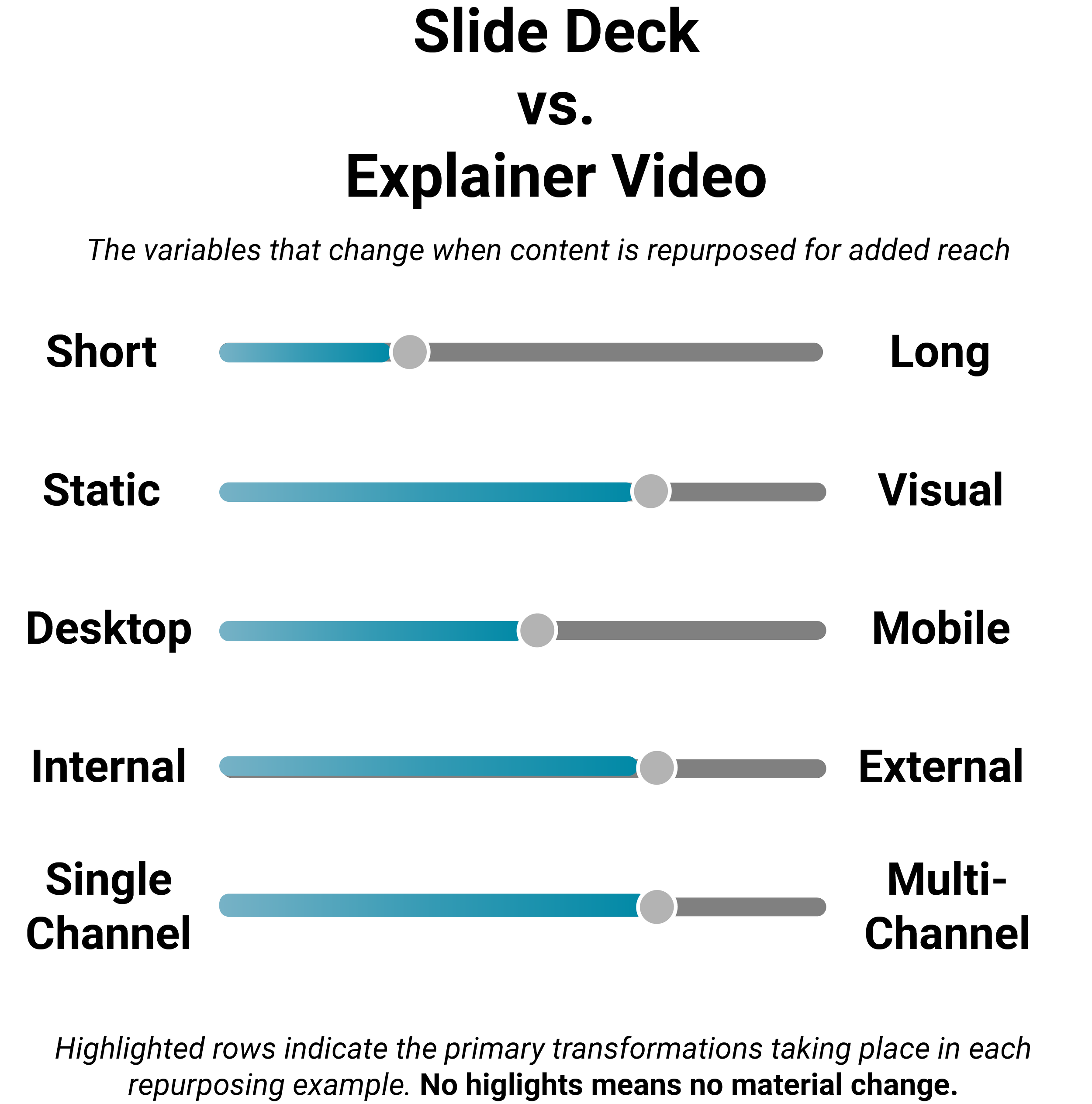
#7: Slide Deck → Explainer Video
“The State of the IPO Market” slide deck → 4–6 minute IPO explainer video for YouTube
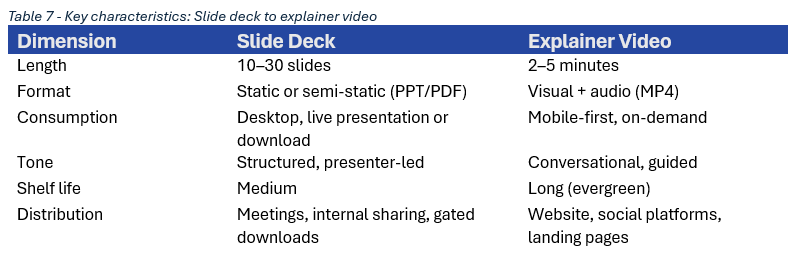
Slide decks often include a wealth of information and visuals that can be used to create short explainer videos. Information from an old slide deck might need to be updated and fact-checked, but the process is easier than starting a new video from scratch.
By transforming slides into a self-contained explainer, you can preserve the original structure and messaging while making the content accessible to a wider audience, on demand.
Why This Transformation Matters
Slide decks are one of the most common content formats in financial services, but they are rarely designed to stand on their own. Without a presenter, slides often lack sufficient explanation, context, and narrative flow, limiting their usefulness outside live meetings or internal presentations.
Converting a slide deck into an explainer video removes this dependency. The video format ensures that key points are communicated clearly and consistently every time, regardless of who is watching or when. This makes the content more durable and more versatile—usable across sales, onboarding, education, and internal alignment.
Why This Works
Explainer videos align structured information with guided delivery. From an operational perspective, the source material already exists, which reduces production effort and minimizes compliance risk. The transformation focuses on presentation rather than reinvention.
In addition to YouTube, an explainer video can be reused across multiple channels: embedded on a website, included in onboarding materials, shared with prospects, or incorporated into broader educational campaigns or funnels.
#8: Internal Training or CE → Client-Facing Education (Courses)
Internal CE module on options risk → Client-facing educational course: “Options Strategies 101.”
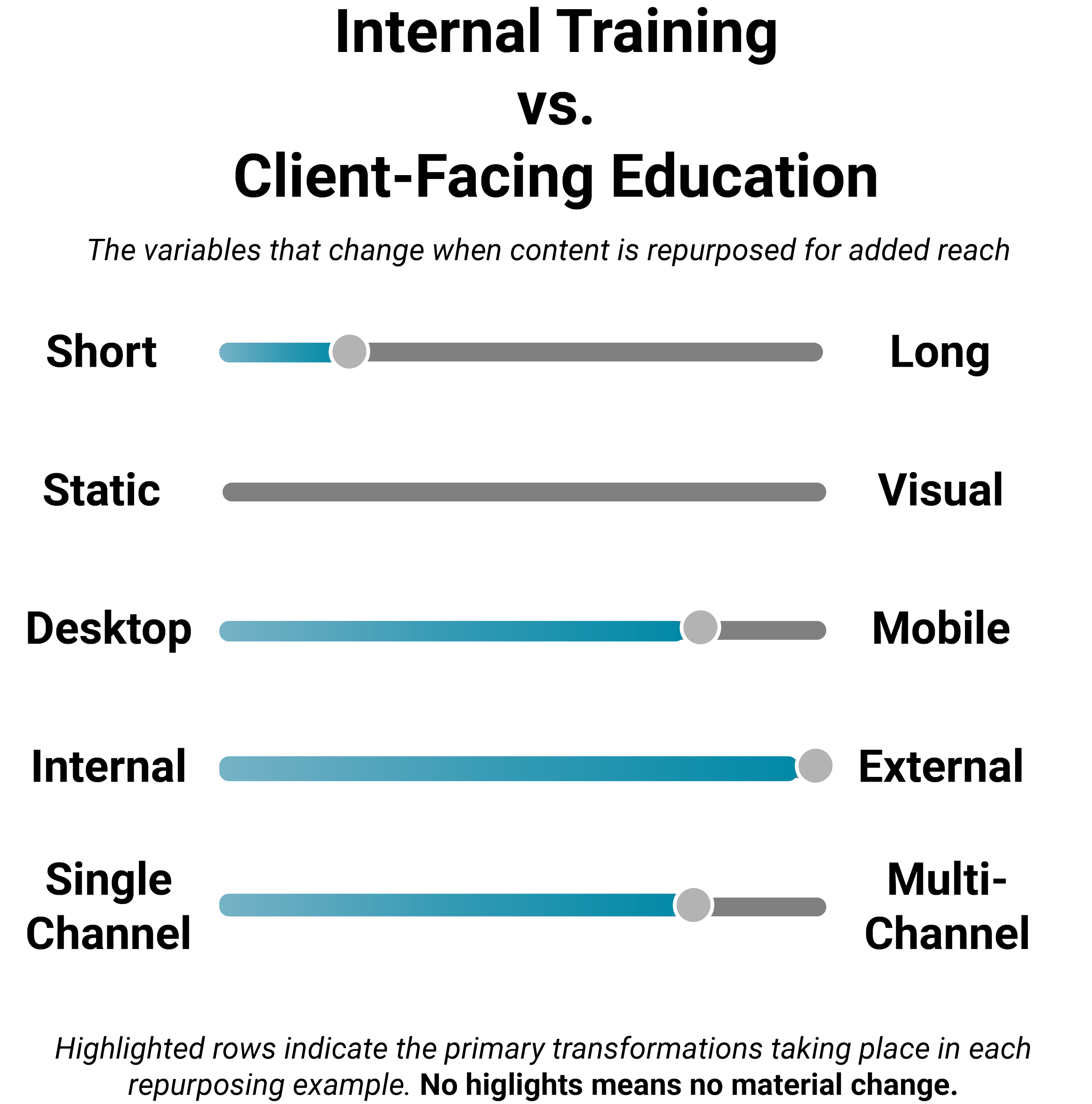
Repurposing internal training or continuing education (CE) content into client-facing education allows you to reuse the most rigorous material in a new context. These resources are already accurate, reviewed, and logically structured, which makes them well-suited for educational content aimed at prospects and clients.
With targeted adjustments to tone, terminology, and delivery, internal expertise becomes an external asset that builds understanding and trust without starting from scratch. The goal isn’t to simplify the thinking, but to translate it into a format clients can absorb and apply.
Why This Transformation Matters
Financial firms invest significant time and resources in developing internal training and CE materials to educate advisors, planners, and support staff. Yet much of this content never leaves the organization, even though it addresses the same questions and concepts clients routinely ask.
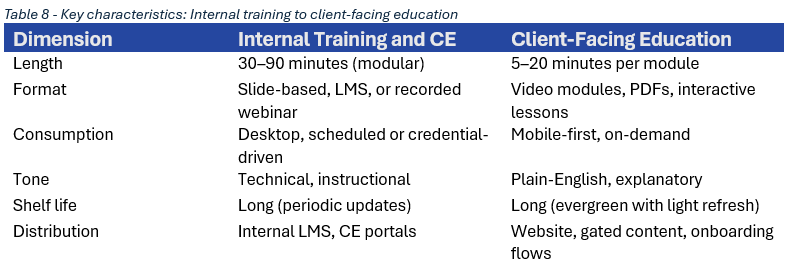
Transforming internal education into client-facing courses allows firms to extend the value of that investment. Because the content is now external rather than internal, it also becomes multi-channel and dynamic rather than single-channel and static.
Why This Works
From an operational standpoint, internal training and CE content are among the lowest-risk materials to repurpose. It is already vetted for accuracy, aligned with firm philosophy, and reviewed through formal processes. Generative AI can do much of the heavy lifting when it comes to transforming this type of content from internal to external.
For clients, this format meets a real need: clear explanations of complex topics delivered in a structured, self-paced way. The result is education that feels authoritative without being overwhelming, strengthens trust, and positions the firm as a long-term guide rather than a one-time advisor.
#9: Marketing Copy → Platform Specific Ads
Example: Website positioning statement → LinkedIn sponsored post and ads
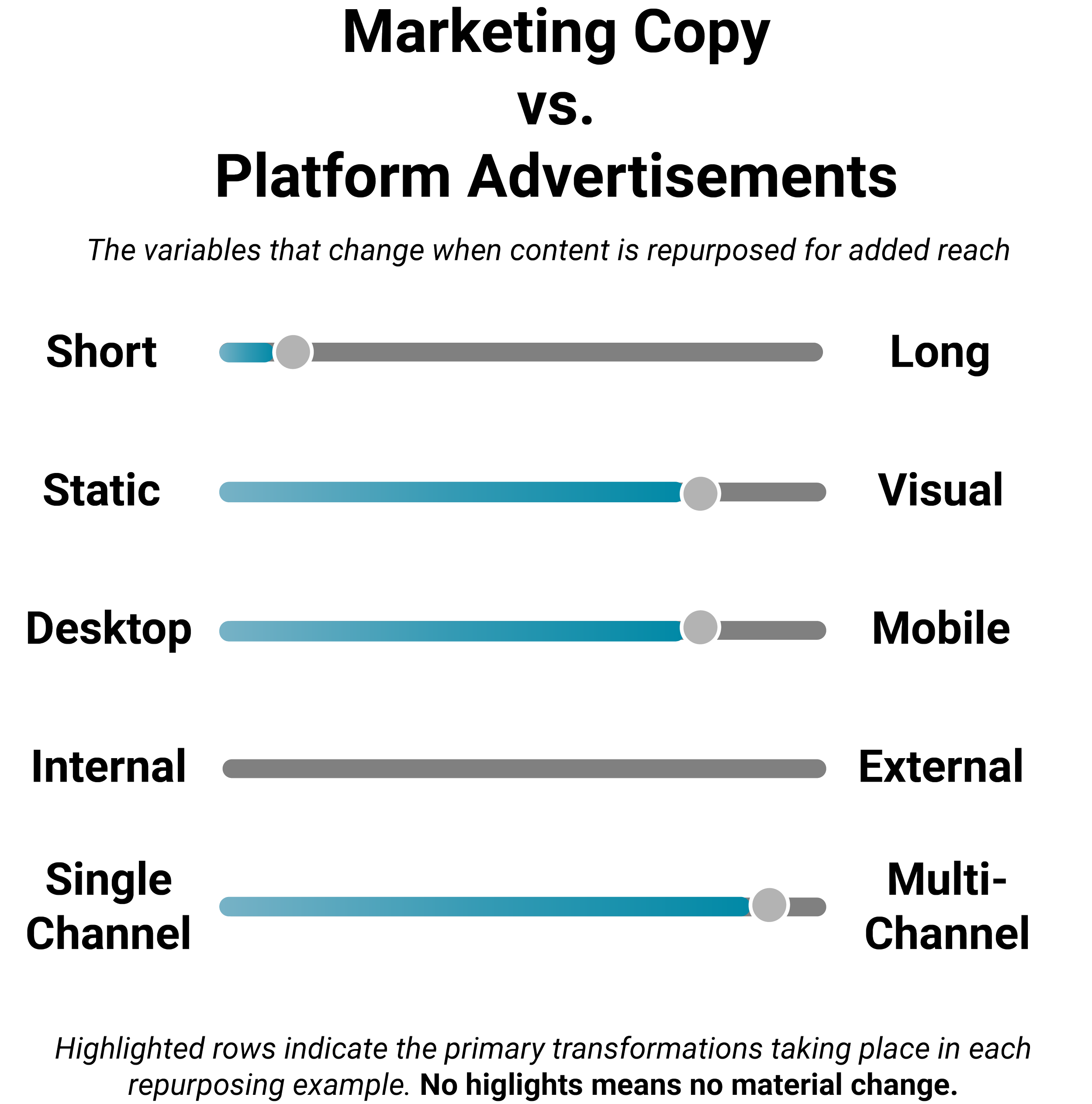
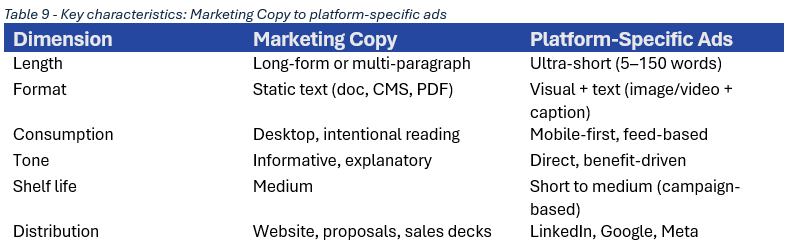
Marketing copy written for websites, brochures, or pitch decks is designed for deliberate reading. Paid platforms work differently. Repurposing existing marketing copy into platform-specific ads isn’t about inventing new ideas; it’s about reshaping approved language to fit the environments where prospects actually encounter it.
Each platform imposes constraints on length, format, and pacing. What succeeds in a website paragraph must often be reduced to a sentence, a headline, a native ad, or a short video hook. The goal is clarity and relevance, not creative reinvention. The goal is to extend reach and test resonance without introducing new claims or unnecessary compliance risk.
Why This Transformation Matters
Paid platforms such as LinkedIn, Google, Facebook, and Instagram are feed-driven and attention-constrained. Long-form website copy—no matter how well written—is rarely consumed in these environments. As a result, many firms either avoid paid ads entirely or struggle to make them work in a compliant, repeatable way.
However, ads still work, and that’s why you see large firms like Fisher Investments running them on different websites. In addition, several independent RIAs have publicly shared that consistent investment in paid social, combined with continuity, can generate new business. Here’s a direct quote from an advisor on Reddit who saw his client base and AUM grow exponentially thanks to strategic ads since 2024 (Note: I have not verified the numbers are accurate, but the point still holds regardless of the dollar amounts).[i]
I have been spending ~$2k/month on Facebook/Instagram ads for myself. That's roughly 20 appts/month booking. 75% show. 1 will likely become a client that generates ~$13k in revenue over 12 months.
YouTube, I spend $2500/month on an editor and that's it. Worth his weight in gold. I am posting 6 long form videos and 6 shorts monthly. So something comes out roughly every 2.5 days.
He went on to say that he posted 100 YouTube videos before gaining any real traction.
While this example showcases why advisors often need to hire writers for their content needs (joking), it also shows that ads aren’t standalone campaigns, but best used as distribution engines for educational content that already exists. The ads surface ideas, build familiarity, and drive prospects into deeper, trust-building assets such as videos, articles, or educational landing pages. The marketing copy serves as a starting point to a much larger lead-gen system boosted by ads
[i] https://www.reddit.com/r/CFP/comments/1pt7qz0/evaluate_our_job_offer/
Why This Works
Platform-specific ads aren’t new. From an operational standpoint, using existing marketing materials can reduce compliance risk: the core messaging has already been reviewed, and the transformation centers on emphasis, length, and presentation rather than substance.
This approach also acknowledges a practical reality: paid distribution requires investment. By grounding these ads in existing copy, firms shorten review cycles, preserve brand voice, and create a scalable way to test and distribute ideas across platforms.
The result is broader reach, greater message consistency, and a more efficient use of marketing assets firms already own, without turning compliance or advertising into an ongoing experiment.
#10: Thought Leadership/Commentary → Year (or Quarter) in Review
Monthly market commentaries → “2025 Market Themes: What Mattered and Why” (Year-in-Review)
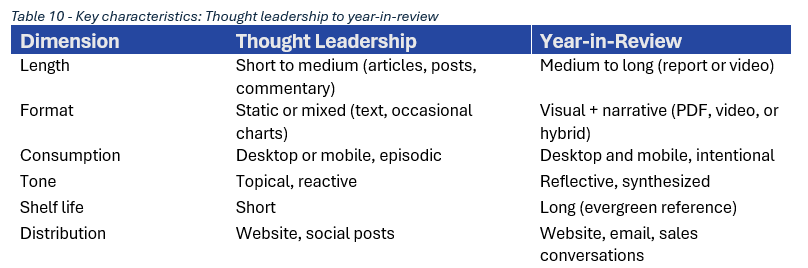
Repurposing ongoing thought leadership into a year- or quarter-in-review allows firms to move beyond commentary and establish perspective. Rather than presenting viewpoints on short-term events, a review synthesizes key themes, decisions, and insights into a larger, cohesive narrative.
It can help you show how your firm thinks, the company ethos, and why a long-term approach is an essential component of sophisticated investing.
Why This Transformation Matters
Print content is often consumed in pieces: a blog post here, a commentary there, a short reaction to market events. While this content may be timely, it can feel disconnected for audiences who encounter it sporadically.
A year- or quarter-in-review brings coherence to that stream of content. By organizing past commentary into themes and takeaways, firms provide a clearer understanding of how decisions, views, and priorities evolved. This helps position the firm as deliberate and disciplined, rather than reactive.
Why This Works
From an operational standpoint, reviews are built entirely from existing, public-facing material. There is no need to introduce new viewpoints, forecasts, or performance claims. The transformation is editorial and involves selecting, organizing, and contextualizing content that has already been shared. Generative AI can speed up this task exponentially.
For audiences, a year- or quarter-in-review format offers clarity and efficiency. Once a system of production is in place, it’s easily repeatable for each subsequent period.
Next steps
If your firm is sitting on valuable, actionable content with untapped repurposing potential, we invite you to watch the accompanying executive video:
Educational Content as a Scalable Asset
The video expands on the concepts outlined in this guide and demonstrates how a compliance-first workflow can help financial firms scale investor-facing content efficiently, safely, and at a fraction of traditional production costs.
If you’d like to discuss how this approach might align with your firm’s specific goals and existing materials, you may schedule a consultation using the scheduler on our website.
Thank you for reading, and for considering how Rule1120 can strengthen your client communication and outreach strategy
The information provided in this guide is believed to be accurate at the time of publication but is not guaranteed. No representation or warranty, express or implied, is made as to its accuracy or completeness.